

There is a growing idea in some Christian circles that humanity is born essentially innocent or morally neutral, that sin enters our lives primarily through external influence, and that describing humanity as fallen somehow diminishes the goodness of God or the value of human beings.
I understand the concern.
No Christian should teach that babies are worthless, defective, or objects of shame. Every human being is created by God, bears His image, and possesses extraordinary dignity.
David writes:
“I praise you, for I am fearfully and wonderfully made.”
— Psalm 139:14 ESV
Absolutely.
Human beings are intentionally created by God. Human life has extraordinary value.
But does being wonderfully made mean humanity is spiritually neutral?
It does not.
The same David also says:
“Behold, I was brought forth in iniquity, and in sin did my mother conceive me.”
— Psalm 51:5 ESV
These statements are not contradictory.
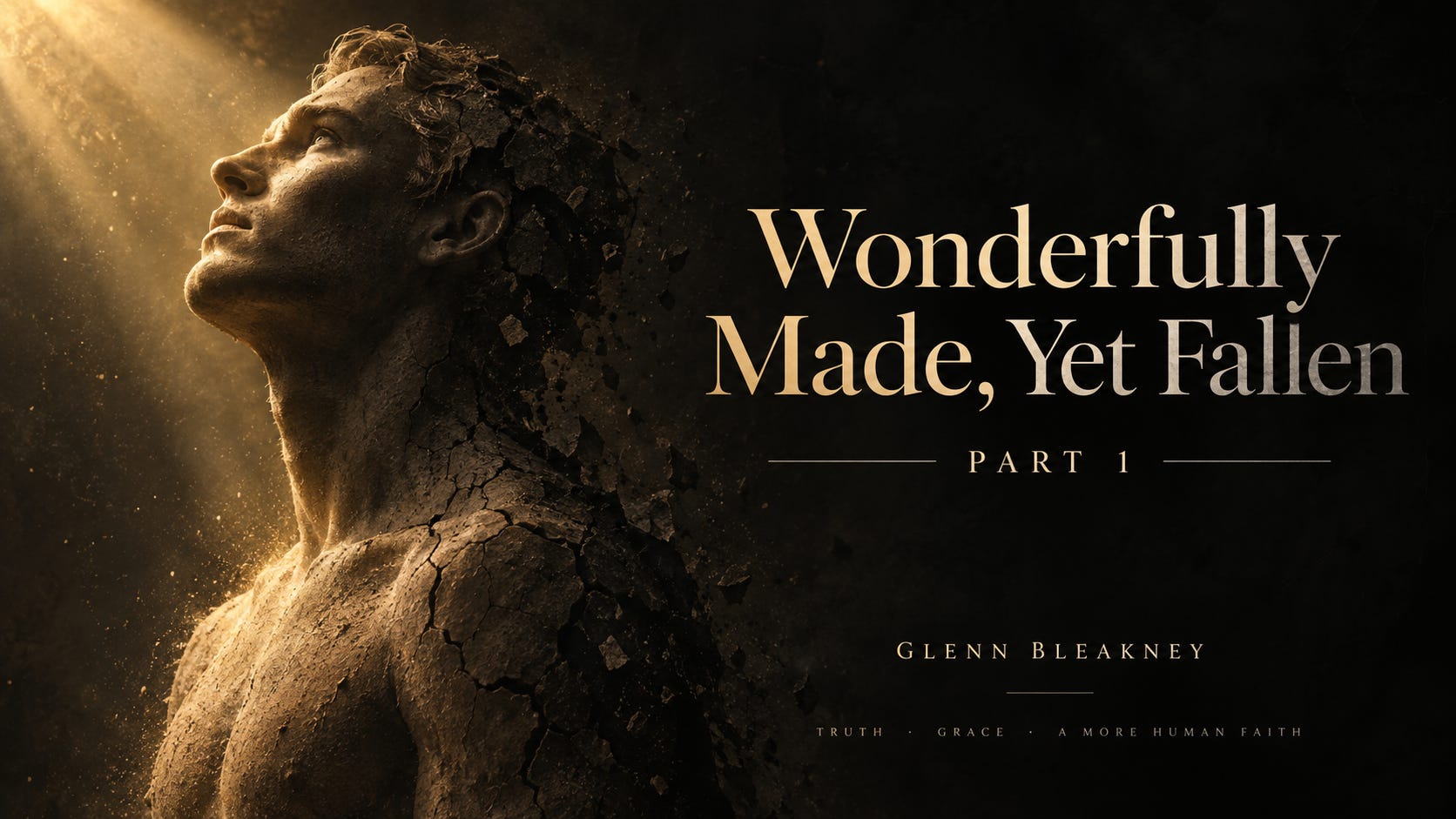
We are fearfully and wonderfully made by God while simultaneously being born into a humanity profoundly affected by the Fall.
Creation and fallenness are different theological categories.
God is our Creator.
Sin is not.
To affirm original sin does not mean that God creates evil people or injects some substance called “sin” into an infant.
Christianity does not teach the existence of a literal “sin gene.”
Original sin is not primarily a biological theory.
It is a theological description of humanity’s solidarity with Adam and the consequences of the Fall.
What Happened Through Adam?
Romans 5 is foundational to this discussion.
Paul writes:
“Sin came into the world through one man, and death through sin.”
— Romans 5:12 ESV
Sometimes that statement is interpreted to mean Adam merely introduced sin into the environment around humanity.
But Paul goes considerably further.
He says:
“By the one man’s disobedience the many were made sinners.”
— Romans 5:19 ESV
Adam is not merely humanity’s first bad influence.
Paul presents Adam and Christ as representative heads of two humanities.
Through Adam come sin, condemnation, and death.
Through Christ come righteousness, justification, and life.
Paul expresses the same reality elsewhere:
“For as in Adam all die, so also in Christ shall all be made alive.”
— 1 Corinthians 15:22 ESV
Notice Paul’s categories:
In Adam.
In Christ.
The gospel is not simply that Adam gave humanity a bad example and Jesus gave humanity a better one.
Jesus is not merely the greatest moral example who ever lived.
He comes as the last Adam, inaugurating a new humanity.
Adam and Eve Are Not Our Starting Point
Another argument sometimes made is that sin must originate externally because Adam and Eve were tempted externally by the serpent.
But there is an obvious theological problem with that reasoning:
Adam and Eve existed before the Fall. We do not.
Adam could encounter external temptation without possessing a fallen human condition because he lived prior to the event through which humanity became fallen.
Romans 5 exists precisely because Paul believes something changed through Adam’s transgression.
We cannot simply take Adam’s pre-Fall condition and project it onto Adam’s post-Fall descendants.
That overlooks the very reality Romans 5 is explaining.
“By Nature Children of Wrath”
Ephesians 2 makes the biblical diagnosis even clearer.
Paul describes humanity apart from Christ as:
“dead in the trespasses and sins”
— Ephesians 2:1 ESV
He goes on to speak of:
“the passions of our flesh”
— Ephesians 2:3 ESV
And then makes this remarkable statement:
“by nature children of wrath, like the rest of mankind.”
— Ephesians 2:3 ESV
Paul is not merely describing what people do.
He is describing humanity’s condition apart from Christ.
That does not erase human dignity.
But neither should our concern for human dignity erase the biblical doctrine of the Fall.
We must hold both truths together:
Human beings possess immense worth because we bear God’s image. Yet human beings desperately need redemption because we belong to a fallen humanity.
The greatness of grace depends upon taking both truths seriously.
Wonderfully Made Does Not Mean Spiritually Neutral
Psalm 139 tells us something magnificent about our Creator.
Romans 5 tells us something sobering about our fallen condition.
Those doctrines do not compete.
We can say with complete biblical confidence:
I am wonderfully made by God.
And:
I was born into a humanity desperately needing redemption.
In fact, recognizing the depth of humanity’s condition does not diminish God’s goodness.
It magnifies the wonder of His grace.
Coming Next
In Part Two, I want to explore why the idea that humanity is born morally neutral sounds remarkably similar to one of the oldest theological controversies in Christian history:
Pelagianism.